
Category

PRP CO₂ Laser

How to Choose Between CO₂ Laser vs. CO₂ + Exosomes

By PRP CO₂ Laser

If you’re exploring skin resurfacing in Seattle, you’ve probably seen two versions of the same treatment: CO₂ laser and CO₂ laser combined with exosomes. Both target fine lines, texture, and discoloration. The question is not “Which one is better”? so much as “Which one makes the most sense for my skin, my downtime, and my budget right now”?

At PRP In Seattle, we offer both options and customize your treatment plan around your goals. Here’s how we help you think through the choice.

First, What CO₂ Laser Actually Do?

CO₂ laser resurfacing uses carbon dioxide energy to remove damaged skin in a controlled way and kick‑start collagen production underneath. In short, concentrated pulses of light vaporize the outer layers of skin and signal your body to build new collagen and elastin.

That’s why CO₂ laser is such a strong option for:

  • Fine lines and wrinkles
  • Rough or crepey texture
  • Sun damage and pigment irregularity
  • Acne scars and other shallow scars

CO₂ can be used as both:

  • Ablative: goes deeper, removes more tissue, requires more downtime but gives more dramatic change.
  • Non‑ablative or lighter settings: focuses more on the surface and collagen stimulation with less recovery.

You can choose CO₂ laser or paired with exosomes as a regenerative booster on top.

What Exosomes Add to CO₂ Lasers?

Exosomes are microscopic vesicles released by cells that carry proteins, growth factors, and genetic signals between cells. In regenerative aesthetics, topical exosome serums are used after procedures like CO₂ laser to support healing and collagen remodeling.

When we apply exosomes immediately after CO₂ laser resurfacing, the goal is to:

  • Help the treated skin recover more quickly
  • Reduce inflammation, redness, and swelling
  • Support collagen and elastin production
  • Enhance texture and pigment improvement over time

Pairing laser with exosomes can shorten downtime and improve visible rejuvenation compared to laser alone, especially in delicate zones like the under‑eye area.

It’s also important to be transparent: there are currently no FDA‑approved exosome products for cosmetic use. Exosome therapies are considered investigational, and the FDA has issued consumer alerts around how these products are marketed. We use them topically as an adjunct to established treatments, with informed consent and a focus on safety.

When CO₂ Laser Alone May Be Enough?

Choosing CO₂ laser by itself can be a great option if:

  • You’re primarily focused on texture and fine lines, not significant pigment issues or scarring.
  • You’re comfortable with a more traditional recovery of redness, swelling, and peeling.
  • You want to keep the treatment more budget‑friendly and skip add‑ons.

CO₂ still delivers strong collagen stimulation and resurfacing. For many patients with mild to moderate aging changes, a carefully planned series of CO₂ sessions can give all the improvement they’re looking for.

When Does It Make Sense to Add Exosomes?

Adding exosomes on top of CO₂ laser usually makes the most sense when:

  • You want to minimize downtime as much as possible.
  • You’re treating high‑visibility areas like the under‑eyes, where swelling or redness can feel more noticeable.
  • You have more advanced texture or pigment issues, and you’re aiming for every possible boost in collagen and regeneration.
  • You’ve had CO₂ before and know you’d like a smoother recovery this time.

At PRP in Seattle, exosomes are priced as an add‑on to CO₂ resurfacing, so it’s something we talk through clearly during consultation.

In practical terms, patients who choose the combo often report:

  • Less intense redness and swelling in the first days
  • A calmer healing phase
  • Earlier improvements in smoothness and brightness

Ablative vs. Non‑ablative: Does That Change the Choice?

Yes, it can. We see a few patterns:

  • Ablative CO₂ + exosomes:

    • Best for deeper lines, etched‑in wrinkles, or more significant sun damage.
    • Exosomes tend to have a larger impact here because the skin has been more aggressively resurfaced and is more open to regenerative signaling.
  • Non‑ablative / lighter CO₂ + exosomes:

    • Good for patients who want subtle improvement with minimal disruption.
    • Exosomes still support healing, but the difference vs. laser may be more modest because the treatment itself is gentler.

During consultation, we talk through how intense the laser should be for your goals and then decide whether exosomes are the right add‑on to support that plan.

Choosing CO₂ Laser or CO₂ Laser + Exosomes at PRP In Seattle

When you come to PRP In Seattle, we don’t expect you to sort all of this out on your own. A typical visit for CO₂ resurfacing or CO₂ + exosomes looks like this:

  • Consultation: We review your skin, medical history, and photos, then talk about what you want to change, wrinkles, dark circles, scars, overall dullness.
  • Treatment planning: We decide together whether to use ablative or non‑ablative settings, how many sessions make sense, and whether exosomes should be part of that plan.
  • Procedure day: We numb, prep, perform the CO₂ laser, then apply exosomes if you’ve chosen the combination treatment.
  • Aftercare: You leave with simple, specific instructions and can message or follow up with us if anything feels confusing or uncomfortable.

Our goal is not just a single good result, it’s a long‑term skin plan that fits your life. If you are ready to explore your options, tell us which procedure you’re interested in through our online form. We’ll get back to you within 24 hours. For immediate assistance, call (206) 279-2112.

FAQs

1. Is CO₂ laser resurfacing better with exosomes or without them?

Both options work well, it depends on your goals, downtime, and budget. CO₂ alone delivers strong resurfacing for texture, fine lines, and sun damage.

2. Do exosomes really speed up healing after CO₂ laser?

Many patients notice calmer skin, less redness, and quicker settling in the first several days when exosomes are added. At PRP In Seattle, they are used topically post-laser with informed consent to support recovery and collagen improvement.

3. How do I know if I need an ablative or non-ablative CO₂ laser?

Ablative CO₂ is best for deeper wrinkles, etched-in lines, acne scars, or heavy sun damage and requires more downtime. Non-ablative CO₂ is gentler, great for early aging changes and mild texture concerns, with a quicker recovery. 

4. Is CO₂ laser with exosomes worth the extra cost?

It can be, depending on your priorities. If you want less downtime, improved comfort during healing, stronger collagen support, or are treating highly visible areas (like under-eyes or full face), most patients feel the add-on is worthwhile. During consultation, we outline both options clearly so you can choose what makes the most sense for you.
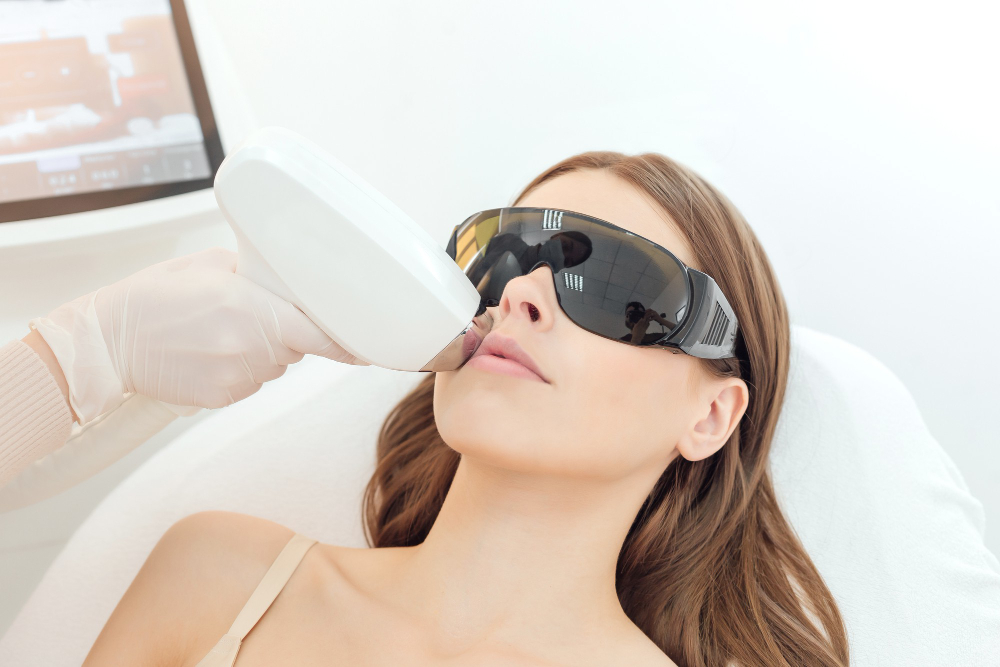

CO₂ with PRP

CO2 Laser + PRP: Accelerated Recovery and Enhanced Results for Skin Rejuvenation

By PRP CO₂ Laser

When it comes to skin rejuvenation, few treatments have captured as much attention in recent years as fractional CO₂ laser resurfacing and Platelet-Rich Plasma (PRP) therapy. Each on its own has a solid reputation for transforming skin, whether it’s smoothing fine lines, improving scars, or restoring overall radiance. But what happens when you combine them? The results often exceed expectations, offering patients faster healing, reduced downtime, and more dramatic improvements in texture and tone.

This blog takes a closer look at why these two therapies are increasingly paired together, how they work together, and what patients can realistically expect from the combination.

Why CO₂ Laser Resurfacing Is Gaining Popularity

CO₂ Laser Resurfacing has been called the gold standard of skin rejuvenation for decades. The treatment works by directing beams of light energy into the skin, creating microscopic columns of controlled injury. These tiny injuries stimulate the body’s natural wound-healing response, which includes collagen and elastin production.

What makes the CO₂ laser unique is its depth of penetration and precision. While more superficial treatments can polish the skin’s surface, CO₂ targets deeper layers where wrinkles, acne scars, and long-standing sun damage are rooted. Over the weeks and months following a session, new collagen forms, the skin contracts, and the overall surface appears smoother and more youthful.

The Role of PRP in Skin Rejuvenation

PRP, often called “liquid gold,” is derived from the patient’s own blood. After a simple blood draw, the sample is spun in a centrifuge to concentrate platelets, which are rich in growth factors and healing proteins. These molecules are known to accelerate tissue repair, calm inflammation, and encourage collagen development.

In aesthetics, PRP has been used in everything from hair restoration to under-eye rejuvenation, precisely because it amplifies the body’s ability to heal and regenerate. It’s a natural, biocompatible solution with little to no risk of allergic reaction, since it comes directly from the patient’s body.

How the Combination Works

So, what happens when PRP meets CO₂ laser treatment? The answer lies in how these two therapies complement one another. The laser creates controlled micro-injuries that stimulate repair, while PRP delivers concentrated growth factors that accelerate healing and collagen remodeling. Together, they make a cycle of injury and recovery that tilts heavily toward regeneration.

  • Micro-channels from the laser act as gateways. After a CO₂ session, the skin is temporarily more permeable, which allows topical PRP to penetrate deeper than it normally could.
  • Growth factors meet active repair. The controlled injury created by the laser is the perfect environment for PRP to do its job. It encourages faster recovery and enhances the remodeling of collagen in those exact treatment zones.
  • Reduced downtime, enhanced outcomes. Patients frequently report less redness and swelling, shorter healing time, and results that appear faster and last longer compared to laser alone.

In many clinics, PRP is applied topically across the treated areas immediately after the laser pass. Some practitioners also choose to inject it directly into specific concerns, such as deep acne scars, for an added boost.

Things to Know If You’re Darker Skinned

For people with medium to deeper skin tones, one of the main concerns with ablative lasers is post-inflammatory hyperpigmentation (PIH), dark spots that can appear after the skin heals. Modern fractional lasers are gentler and carry less risk than older, fully ablative lasers, but PIH can still occur, and studies show the risk varies widely.

Some steps may lower this risk. Some doctors recommend short courses of anti-inflammatory creams, while strict sun protection and pigment-balancing skincare remain essential. PRP may also help reduce inflammation after treatment, but it isn’t a guaranteed safeguard against PIH.

If your skin falls into the deeper Fitzpatrick types, it’s worth asking your provider about doing test spots, using lower energy settings, and starting on a pretreatment protocol designed to balance pigmentation before your session.

Final Word

Pairing fractional CO₂ with PRP isn’t a passing trend but a data‑backed way to make the recovery smoother and, in many acne‑scar protocols, to nudge results further than laser alone. A CO₂ laser combined with PRP demonstrates how blending technologies and natural biology can give patients the best of both worlds: the proven resurfacing power of CO₂ and the healing, regenerative support of PRP.

Schedule Your CO₂ + PRP Consultation Today

Experience smoother, healthier skin with less downtime. At PRP in Seattle, we specialize in combining advanced CO₂ laser resurfacing in Bellevue & Kirkland with PRP Injections to deliver powerful, natural results. Call (206) 279-2112  or click here to schedule your consultation  today and take the first step toward brighter, rejuvenated skin.

PRP CO₂ Laser Resurfacing

How CO2 Laser and PRP Work Together for Younger, Smoother Skin

By PRP CO₂ Laser

You’re diligent with sunscreen, serums, and maybe even regular facials, so why do those stubborn lines and uneven texture still linger? The truth is, surface-level treatments can only do so much. To truly transform your skin, you need something deeper. A two-pronged, science-backed approach—PRP CO₂ Laser Resurfacing —targets both surface texture and dermal regeneration, resulting in noticeably smoother skin with less downtime compared to laser alone.

CO₂ Laser: How It Penetrates Deeper Than Peels

While chemical peels exfoliate the surface, fractional CO₂ lasers penetrate deeper, targeting both the outer and inner layers of skin. Here’s how:

  • Microscopic Precision: The laser produces microscopic, controlled injuries (only 0.1–0.3 mm wide) in approximately 20% of the skin, leaving adjacent tissue undamaged for rapid healing.
  • Deeper Stimulation: It reaches a depth of 1.6mm into the dermis, stimulating collagen for months, not days.
  • Stronger Results: With one treatment, it can refine deep wrinkles, acne scars, and sagging more effectively than peels alone.

Peels revitalize the surface, but CO₂ laser recontours it from the inside out.

PRP Defined: From Blood Draw to “Liquid Gold” Growth Factors

PRP is a centrifuge‑concentrated fraction of your own blood—typically 3–5× baseline platelet count. Once activated, platelets release a time‑course of growth factors (PDGF, TGF‑β, VEGF) that:

  • Accelerate skin cell regeneration (keratinocytes & fibroblasts)
  • Increase collagen & elastin (essential for firm, youthful skin)
  • Reduce inflammation (less redness and inflammation)

Because it’s your own blood, PRP is generally considered safe with a very rare chance of allergies or infection. 

The Power of Two: How PRP Boosts Laser Results

Freshly treated skin from laser resurfacing creates tiny channels—think of them as direct pathways for PRP to deliver healing growth factors deep into your skin. Research shows that when laser energy and PRP work together, they double the skin’s natural repair response compared to using either treatment alone, providing:

  • Faster healing (less redness and flaking)
  • Stronger collagen production
  • Reduced inflammation

A pooled data from a PMC study showed a significant 1.2-point reduction in downtime (days) and higher odds of ≥50% scar improvement with the CO₂ and PRP combination.

Pain Management & At‑Home Care Hacks

Discomfort during treatment is minimized with topical numbing and cooling. Afterward, a layer of PRP acts as a natural bandage, soothing skin and speeding up healing.

  • First 2 Days: Use saline sprays and gentle ointments—skip harsh actives.
  • Day 3+: Switch to hydrating peptides and high-zinc SPF 50.
  • Additional Support: Vitamin C and collagen supplements may offer benefits (although research is still ongoing). Plus, good sleep and hydration enhance healing.
Safety Note: Since PRP is derived from your own blood, the risks of allergies or infections are extremely low.

Final Word

By combining CO₂’s precision resurfacing with PRP’s growth-factor therapy, you can treat both texture anomalies and thinning skin in a single, coordinated treatment plan. The payoff: quicker healing, less pigment surprise, and a complexion that continues to improve for months rather than weeks.

Ready to try CO₂ laser + PRP?

If a smoother texture and faster healing sound like your skin goals, PRP in Seattle has you covered. Our team offers fractional CO₂ laser resurfacing immediately followed by topical PRP to amplify collagen renewal, shorten downtime, and give you a noticeably refreshed complexion. Call (206) 279-2112 or click here to book your consultation today.